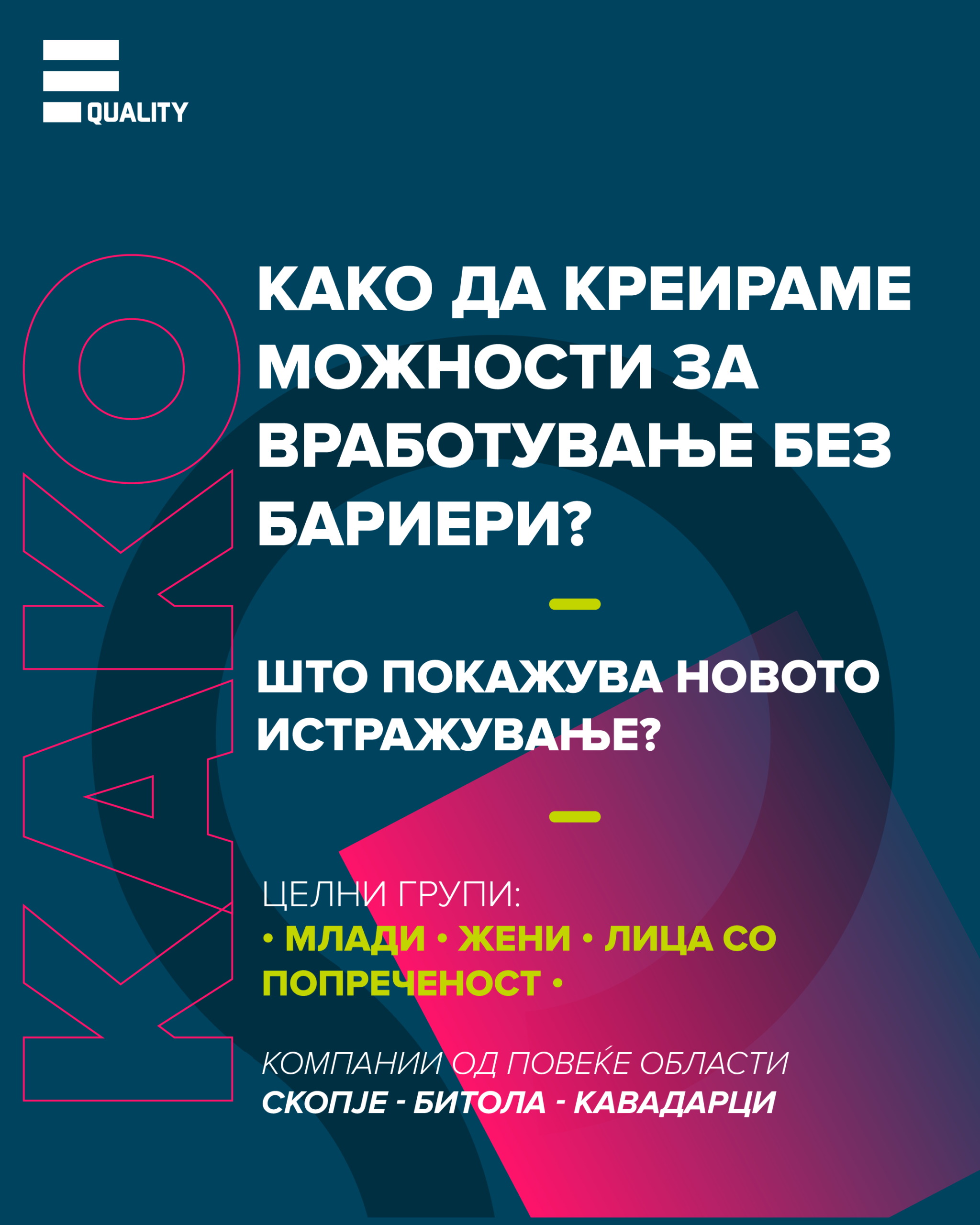
The research aimed to identify the challenges and stereotypes faced by young people, including people with disabilities, when entering the labor market, as well as to support the services and organizations responsible for employment and employee motivation to respond to these needs appropriately.
As part of the project ‘Increasing the Attractiveness of the Labor Market Trough Professions Without Barriers,’ led by the Equality Association, a study was conducted on the trends, barriers, and challenges faced by young people, women, and persons with disabilities in employment.
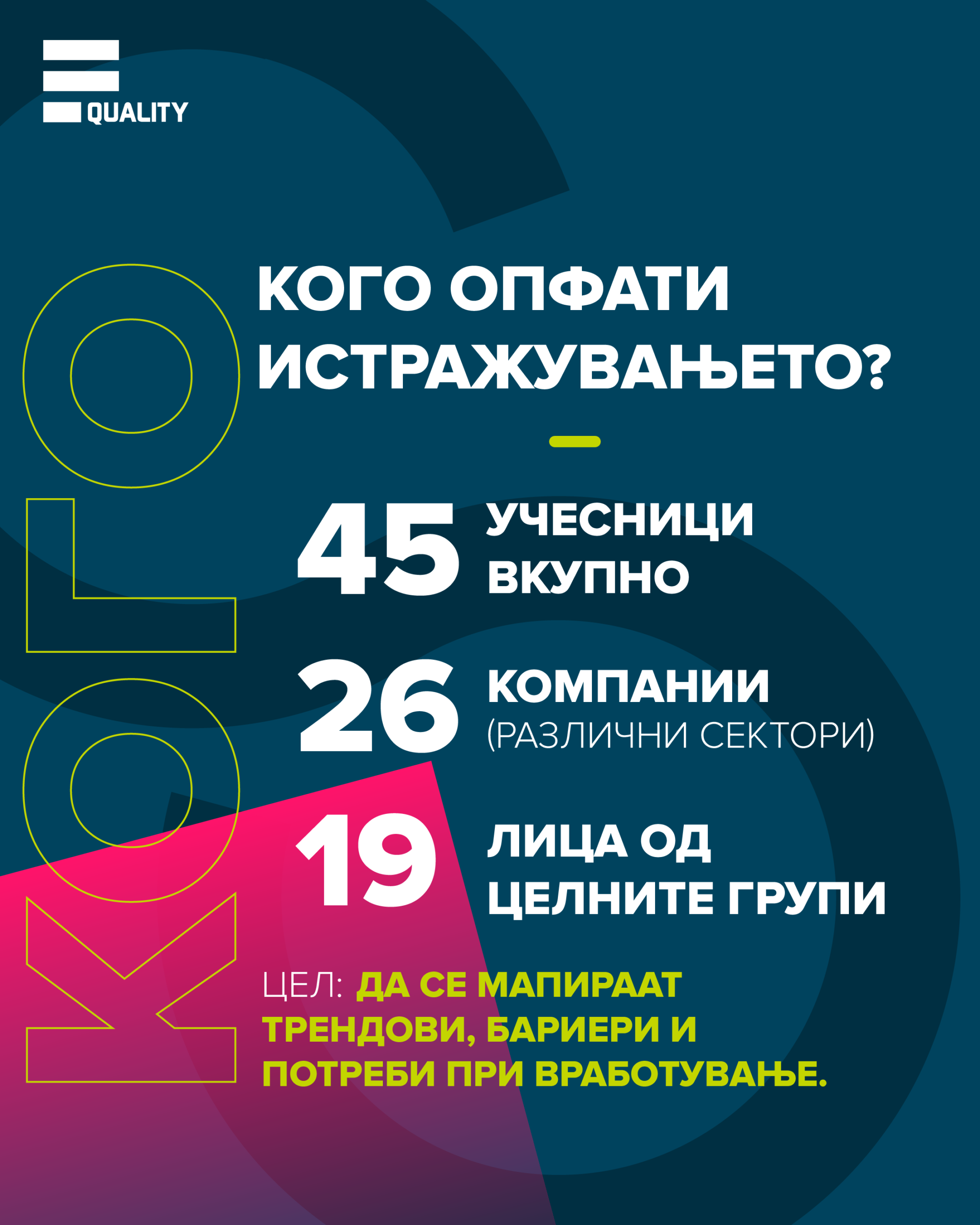
The research “Analysis of Trends, Challenges, and Barriers in the Employment Process” consisted of two questionnaires – one aimed at companies from various sectors (agriculture, tourism and hospitality, circular economy, textile and automotive industry, food industry, etc.), and the second covering the experiences of young people, women, and persons with disabilities. The analysis included Skopje, Bitola, and Kavadarci, and the questionnaires were distributed through the network of the Equality Association and additional contacts from chambers and associations, in order to increase representativeness.
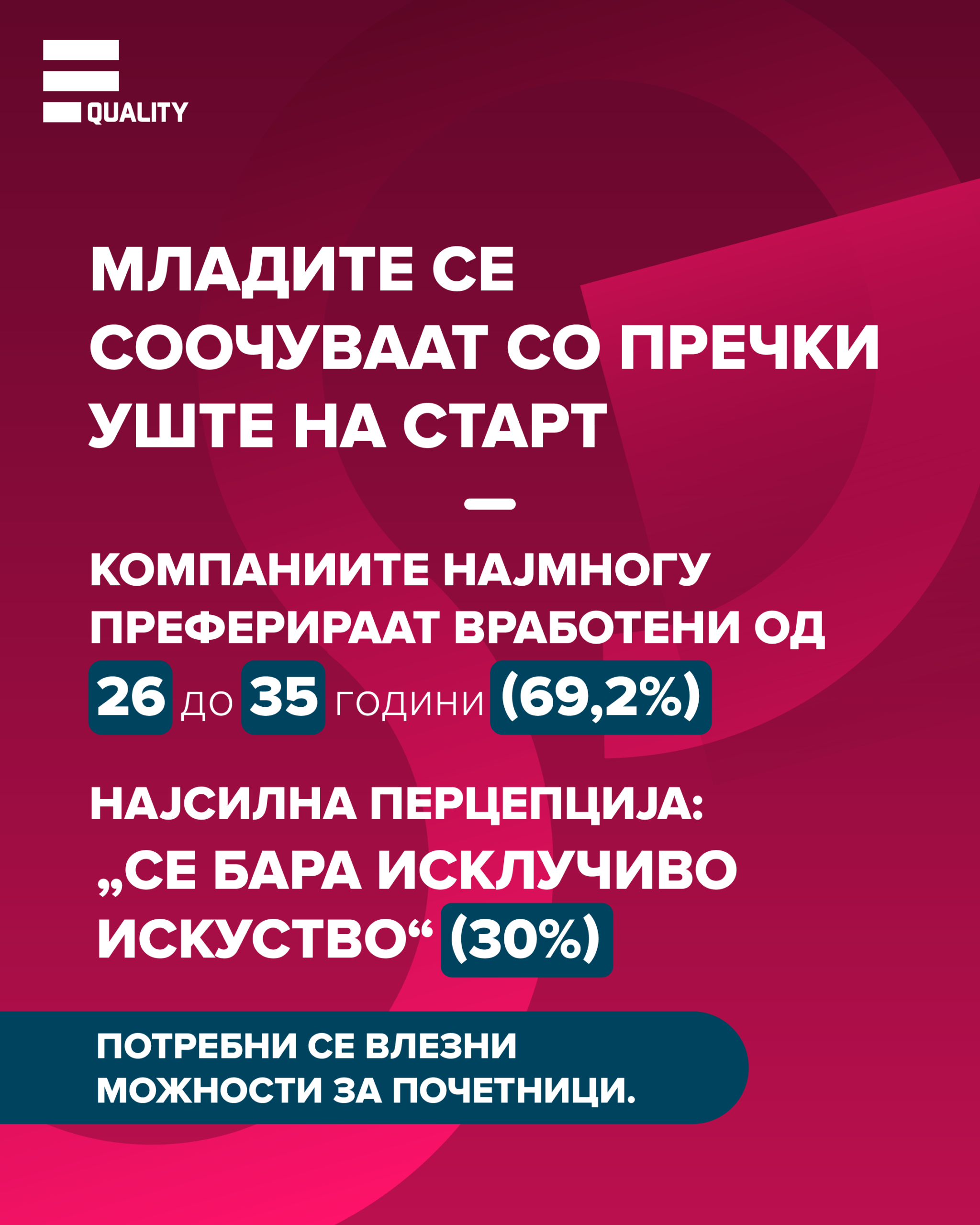
The findings indicate that the initial entry of young people into the labor market is hindered: companies most often prefer to hire people aged 26–35 (69.2%), while the 18–25 age group is less represented. The most prominent perception among young people is that ‘only experience is required’ (30%), which creates a sense of limited opportunities for beginners.
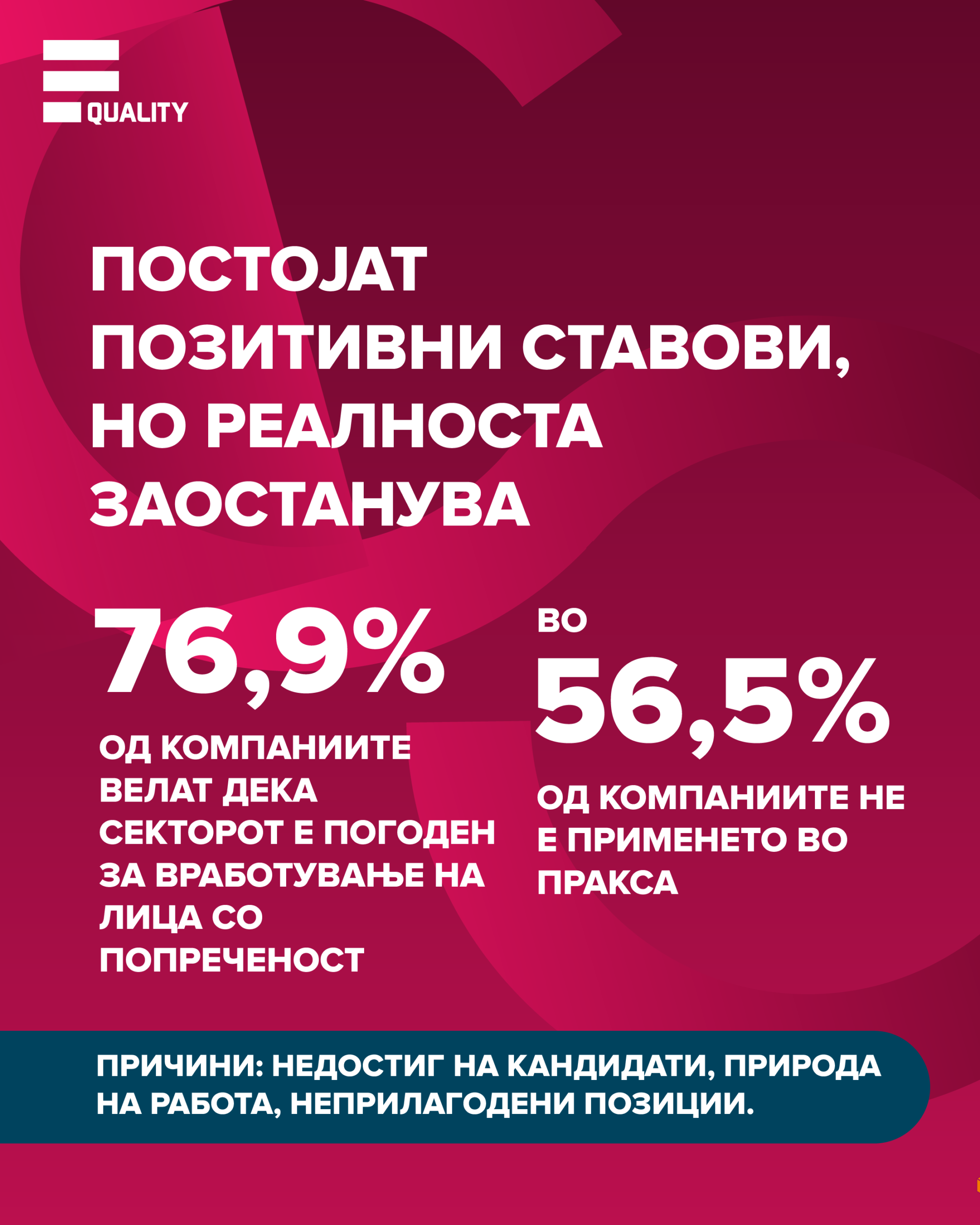
Among people with disabilities, a gap is observed between strategic principles and reality: 76.9% of employers believe that their sector is suitable for employing this category of citizens, but in 56.5% of companies, this has still not been implemented.. The causes are most often related to lack of candidates, the nature of the tasks (field/physical work, machinery, travel), and inadequately adapted positions.
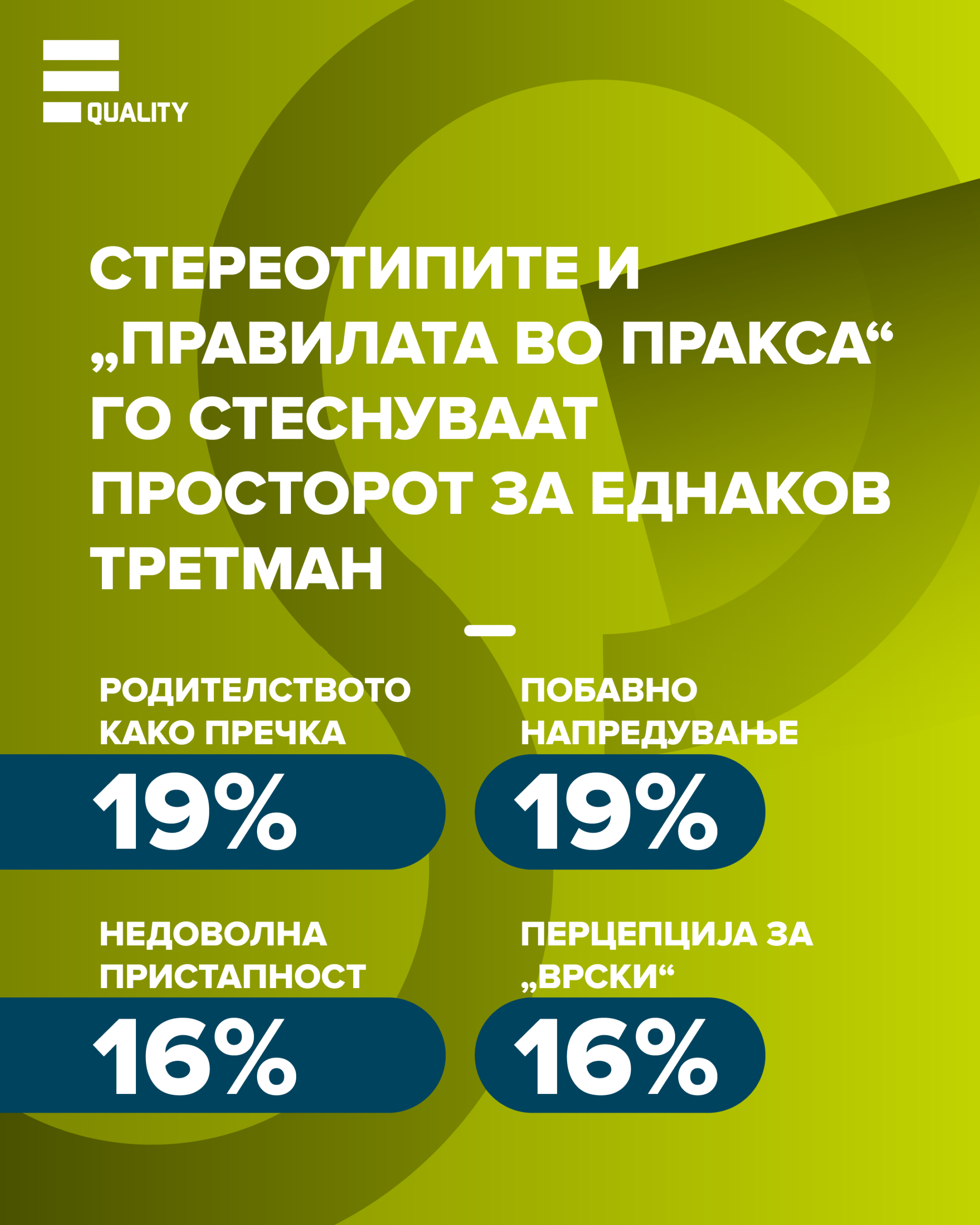
In terms of equal treatment and representation, there are structural imbalances across sectors (automotive 70% men, manufacturing 75% men, textile 70% women), accompanied by stereotypes about parenting and career advancement (19% each), as well as barriers related to accessibility and fairness (16% each insufficient accessibility/’connections’).
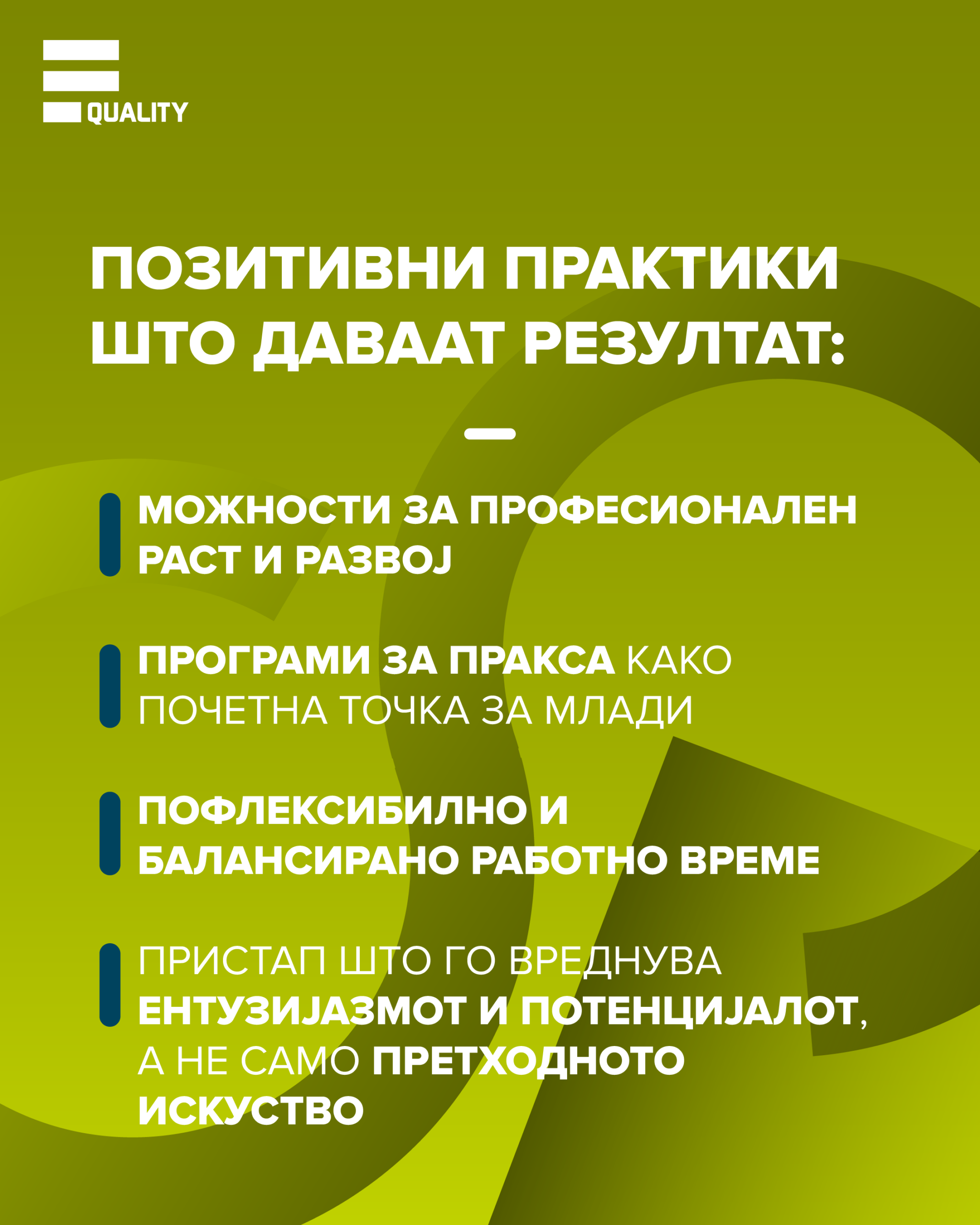
Companies cite competition, emigration, seasonal migrations, and a shortage of experts as challenges for turnover, but at the same time they point out positive practices: opportunities for professional growth and development, internship programs as a starting point for young people before employment, more flexible and balanced working hours, as well as an approach that values enthusiasm and potential, not just previous experience.
The research highlights the need for measures that will facilitate young people’s access, reduce the role of stereotypes in career development, and improve the accessibility and adaptation of job positions, in order to ensure that equal opportunities are applied in practice.
The full research is available at the following link: